
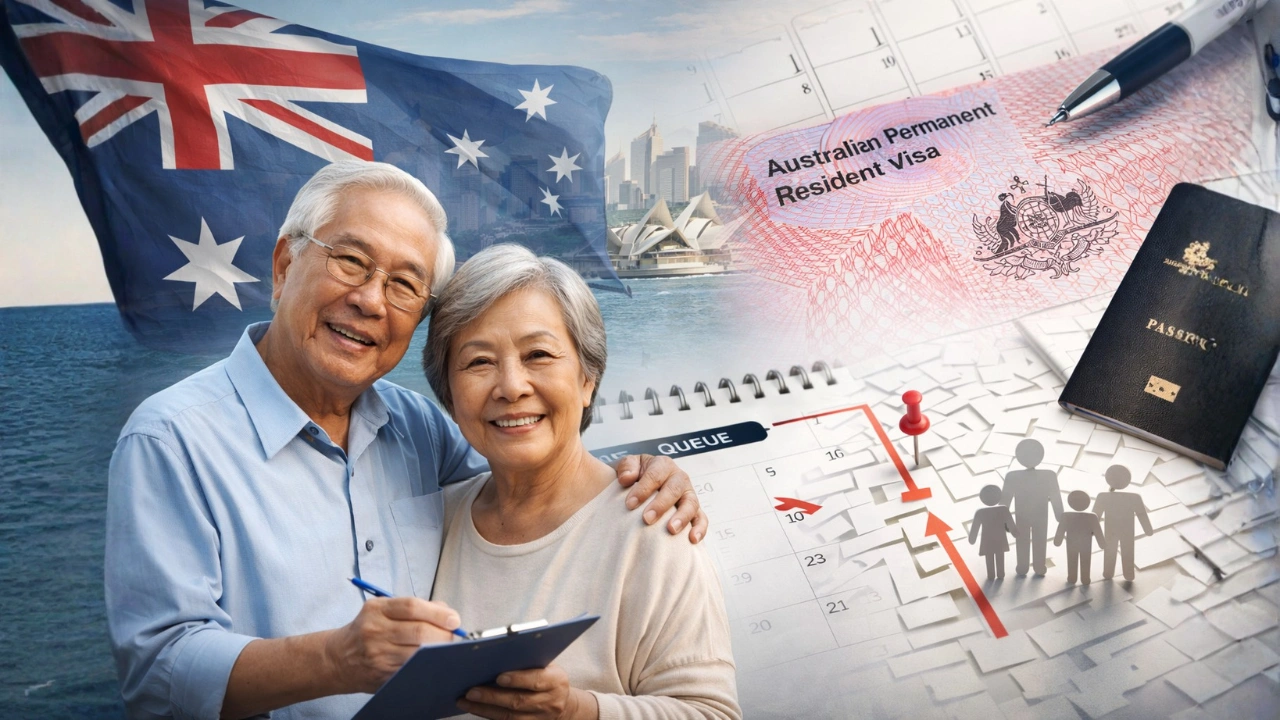
Bringing parents to Australia permanently is one of the most emotional and complex migration decisions a family can make.
The parent visa 103 is a permanent residency visa designed for parents of Australian citizens, permanent residents, or eligible New Zealand citizens. It offers a lower government application charge compared to contributory options. However, it comes with a very long waiting period due to annual caps.
This guide explains everything you need to know – eligibility, costs, timelines, documents, risks, and smart planning strategies.
What is the Subclass 103 Parent Visa?
The Subclass 103 is a:
- Permanent residency visa
- Non-contributory parent visa
- Offshore application (must usually be outside Australia at the time of the grant)
- Capped and queued visa
Once granted, parents can:
- Live in Australia permanently
- Access Medicare
- Work and study
- Sponsor eligibale family members
- Apply for Australian citizenship (if eligible later)
It is permanent, but patience is required.
Who Can Apply – Eligibility Criteria Explained
To qualify, applicants must meet strict criteria.
1.Eligible Sponsor
The sponsor must be:
- An Australian citizen, OR
- An Australian permanent resident, OR
- An eligible New Zealand citizen
The sponsor must be:
- 18 years or older
- Settled in Australia (usually 2+ years residence)
2.Balance of Family Test (Critical Requirement)
Applicants must satisfy this test.
They must have:
- At least half of their children are permanently living in Australia, OR
- More children are living in Australia than in any other single country
If this test fails, the visa cannot proceed.
3.Health Requirements
Parents must:
- Complete medical examinations
- Meet Australian health standards
Conditions causing excessive healthcare costs may result in refusal.
4.Character Requirements
Parents must:
- Provide police clearance certificates
- Declare any criminal history
- Meet public interest criteria
Parent Visa 103 Processing Time (Realistic Expectation)
Let’s address the biggest concern.
The parent visa 103 processing time is extremely long because:
- The visa is capped annually
- Demand exceeds supply
- Applications are processed in queue order
Currently, waiting times can extend beyond 20 years.
Yes, decades.
This visa suits families who:
- Are not in a hurry
- Cannot afford the contributory visa costs
- Want to secure a queue position early
Government Costs (Approximate Figures)
Fee Component | Estimated Amount (AUD) |
|---|---|
First instalment (at lodgement) | ~$4,990 |
Second instalment (before grant) | ~$2,065 |
Additional applicant (18+) | Extra charges apply |
Additional applicant (under 18) | Lower charge |
Fees may change. Always check the current Department rates before lodging.
Comparison: 103 vs 143 Visa
Feature | Subclass 103 | Subclass 143 |
|---|---|---|
Type | Permanent | Permanent |
Cost | Lower | Significantly higher |
Processing Time | Very long (20+ years) | Much shorter |
Assurance of Support | Required | Required |
Financial Contribution | No large upfront contribution | High contribution required |
Suitable For | Budget-conscious families | Families wanting faster outcome |
Step-by-Step Parent Visa 103 Application Process
Step 1: Check Eligibility
Confirm:
- Balance of Family Test
- Sponsor status
- Health and character feasibility
Step 2: Prepare Documentation
Gather identity, relationship, and sponsorship documents.
Step 3: Lodge Application
Submit the application offshore with the first instalment fee.
Step 4: Queue Placement
Application enters the capped queue system.
Step 5: Department Assessment
When a place becomes available, full assessment begins.
Step 6: Second Visa Instalment
Pay the remaining government charge.
Step 7: Visa Grant
Applicant must usually be outside Australia at the time of the decision.
Full Document Checklist (Detailed)
Below is a comprehensive list.
Identity Documents
- Valid passport
- Birth certificate
- National ID card (if applicable)
- Marriage certificate (if married)
- Divorce or death certificate (if applicable)
Relationship Evidence
- Sponsor’s birth certificate showing parent-child link
- Family registration certificates
- Household registration (for some countries)
Sponsor Documents
- Australian passport or PR evidence
- Citizenship certificate (if applicable)
- Proof of Australian residence
- Tax records (sometimes requested)
Police Clearances (Country-Specific Examples)
Applicants must provide police certificates from:
- India – Police Clearance Certificate from Passport Office
- UK – ACRO Police Certificate
- USA – FBI Identity History Summary
- China – Notarial police certificate
- Philippines – NBI Clearance
- South Africa – SAPS Clearance
All documents not in English must be officially translated.
Health Examination
- Chest X-ray
- Medical examination
- Blood tests (if required)
Form Requirements
- Form 40 (Sponsorship form)
- Visa application form (online via ImmiAccount)
Assurance of Support (Financial Obligation)
Subclass 103 requires an Assurance of Support.
This means:
- A financial bond must be paid
- Sponsor agrees to support parents financially
- Bond may be refundable after the required period
This reduces reliance on public welfare.
PRO TIPS (From Migration Strategy Perspective)
- Apply early if you choose 103. Queue position matters.
- Keep contact details up to date for 20+ years.
- Maintain a clean character record.
- Consider upgrading to 143 later if finances allow.
- Keep certified copies of all documents permanently.
Things Families Often Overlook
- Processing times are not negotiable.
- Parents must remain eligible throughout the waiting period.
- Health conditions can change eligibility.
- Policy changes can affect queue movement.
- Parents cannot work in Australia while waiting unless they are holding another visa.
Can Parents Stay in Australia While Waiting?
No automatic right.
Parents may:
- Apply for visitor visas
- Apply for a temporary Parent Visa (Subclass 870)
But visitor visas have limitations.
Is the 103 Visa Worth It?
It depends.
It may suit families who:
- Are financially conservative
- Have younger parents
- Can wait long-term
- Want permanent residency without a high upfront cost
It is not suitable for families needing immediate relocation.
Frequently Asked Questions
What is a 103 parent visa in Australia?
It is a permanent residency visa allowing parents of settled Australian residents or citizens to live in Australia permanently.
Can I switch from 103 to 143 later?
Yes. Some families lodge 103 first to secure a queue date, then apply for 143.
Is there an age limit?
No specific age limit, but health requirements apply.
Summary
The Subclass 103 visa is a long-term family commitment. It offers permanent residency at a lower cost but requires patience and careful planning.
Families who understand the queue system and prepare thoroughly are in a stronger position.
If you are considering this pathway, professional guidance can help you avoid costly mistakes and unrealistic expectations.


